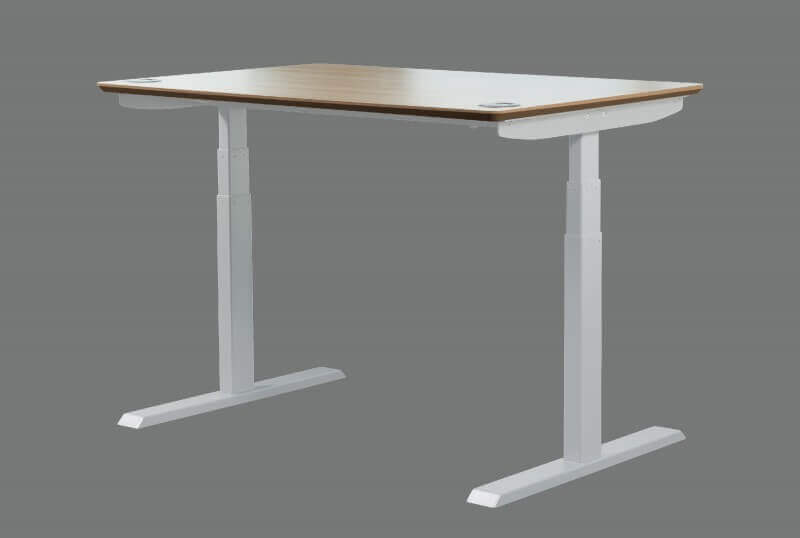

Before you considered commissioning a solid wood desk top, before you thought about the finish or wood type, you likely first had an idea of how big (or small) it should be. This is true of tops for sit/stand frames, fixed frames or even built-in furniture (batten supported etc).
The size of the top determines not just how usable it will be for you, but also how stable (and safe) it will be. While it’s tempting to add a little extra length or trim a few centimetres off the depth to fit into a space, every adjustment affects balance, support, and overall performance.
In this post, we’ll look at the reasons for oversizing or undersizing a desk top, and how much you can safely add or remove. Finally, some additional tips, and also a quick guide to typical overhang and undersize allowances.
Why oversize a desk top?
More space, more equipment
Most people oversize to gain extra workspace. Adding width or depth can provide room for multiple monitors, large accessories, or a more comfortable layout. Just remember that extra surface area means extra weight which is important to factor in, especially for height adjustable frames.
To accommodate a monitor riser
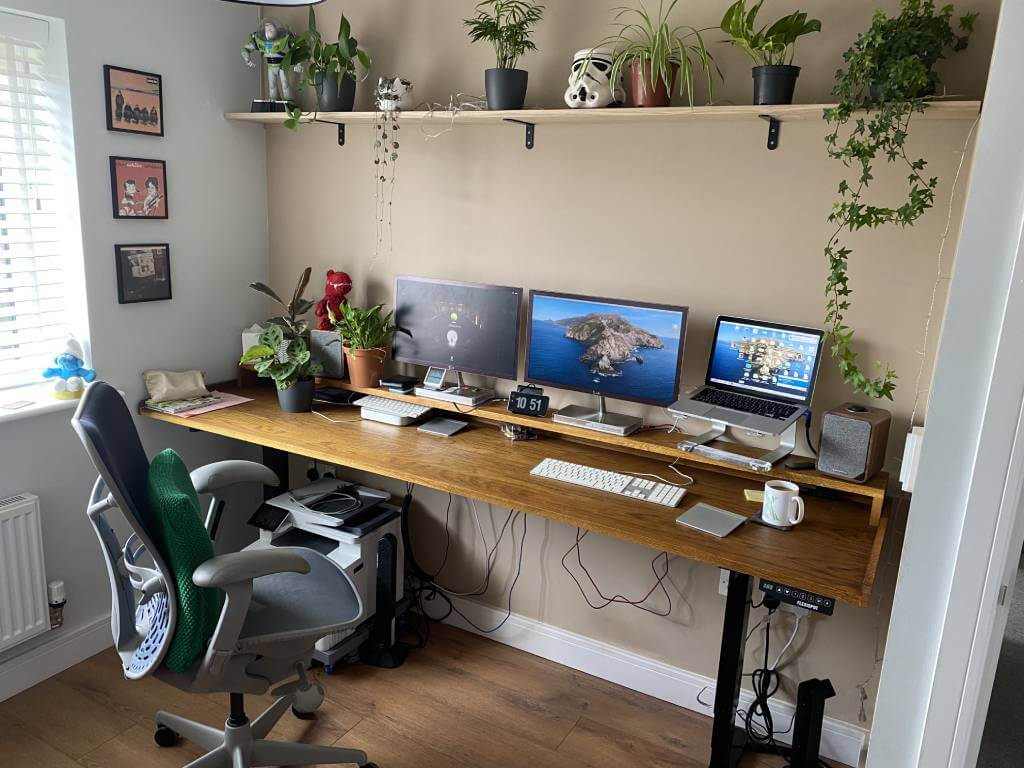
If you use a monitor riser or arm, an larger top can help position screens further back without sacrificing elbow room or keyboard space. A deeper desk top is particularly useful for ergonomic setups, helping you keep a good posture while keeping the display at the correct distance.
Extend over existing furniture
Oversizing can help your top overlap with a drawer cabinet, storage unit, or pedestal which can give a clean, built-in look. It’s a simple way to create a seamless workstation while keeping floor furniture tucked neatly beneath.
To allow for a custom shape
Oversized tops can give extra material to cut into a specific shape, like a scalloped cut-out for comfort at the front etc. some people also want to add a small J shape, or perhaps for a ‘mini return’ approach to create a sit/stand large L shape top.
Why undersize a desk top?
Fit into a specific space
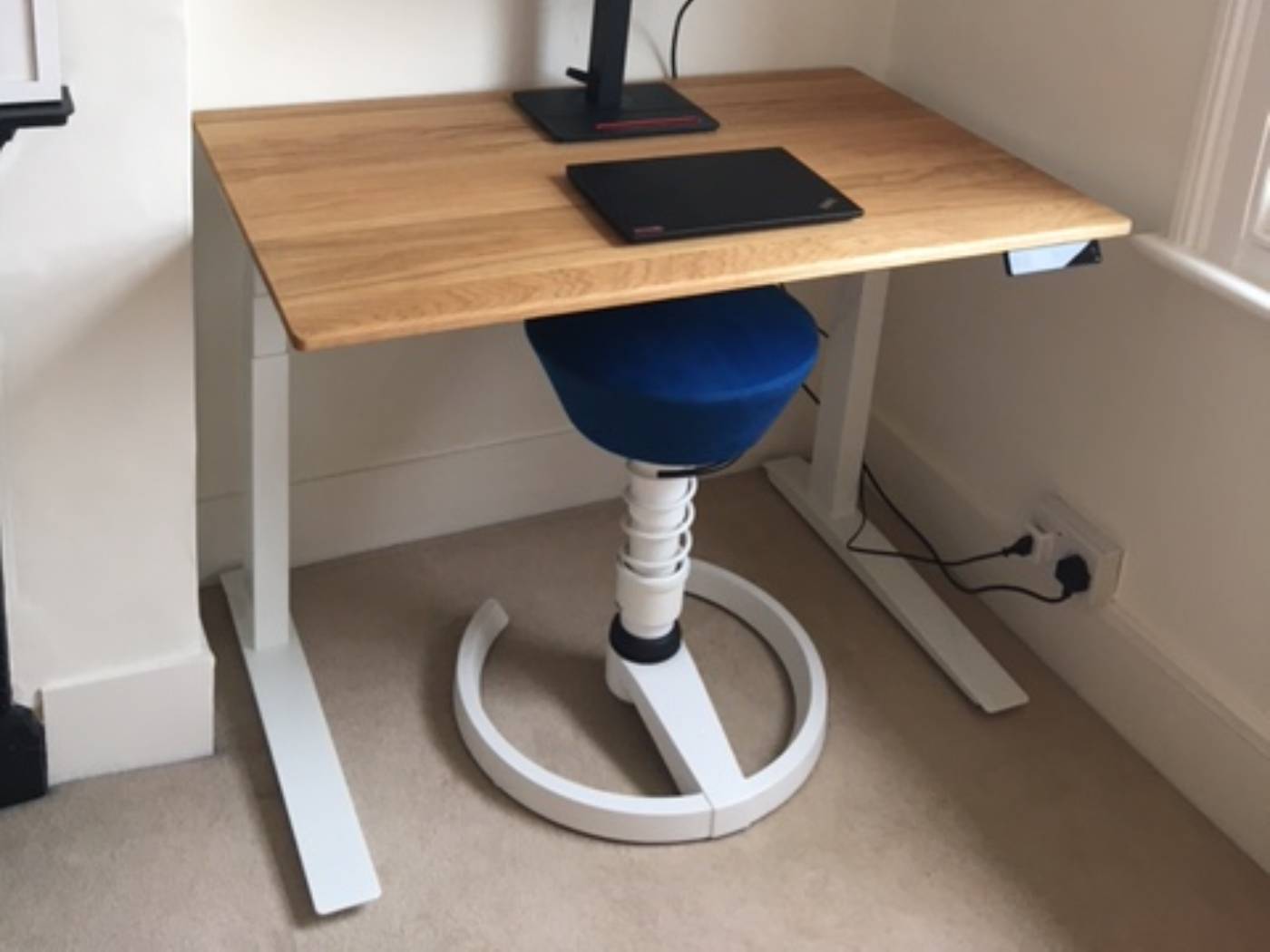
If your desk needs to fit into an alcove, between doors, or under a window, undersizing may be an option. You may have seen the perfect frame, but the standard desk top options are just too big for your use case.
Adapting to a new space
When moving house or office, your previous setup might no longer fit. Commissioning a slightly smaller desk top allows you to reuse your existing frame rather than replacing the entire desk. Using solid wood can also future proof you to potentially required undersizing.
Repurpose an existing frame
A quality desk frame can last for years. If your old top is damaged or no longer suits your space, ordering a new, slightly smaller top is an easy way to refresh your setup without starting from scratch. Again, starting with a solid wood top makes sense for future requirements.
How much can a desk top be oversized?
The answer depends on several factors, including the wood type, thickness, and frame design.
Wood type and thickness
Denser hardwoods like oak or walnut resist bending better than softer woods like pine. Ply is also super stiff/strong (though no solid wood). Thicker tops (25mm and above) support larger overhangs than thinner ones. As a general guide, an overhang of up to 150mm is often fine for a sturdy hardwood top, provided the frame underneath is solid and well-centred.
Fixed frames vs sit/stand frames
Fixed frames are more forgiving of oversizing because they remain stable at one height. Sit/stand frames, on the other hand, can become less stable as height increases — especially with deeper tops. For adjustable frames, try to keep oversizing below 100mm on the sides and less than 50mm at the front and back unless additional support is added.
Supported overhangs
If the overhang is supported by other furniture such as a cabinet, return leg, or wall bracket you can safely extend further. The key is ensuring the load is transferred to a solid structure rather than relying solely on the frame.
Weight limits
Extra size means extra weight. Always check the frame’s specification for what the weight capacity is. If the frame is only sold with a top, the weight limit will often include the weight of the top. If it is sold frame only, then the top weight is excluded from the total. For height adjustable desks, exceeding the limit is not really an option, it can affect motor performance or cause uneven lifting.
How much can a desk top be undersized?
Avoid exposing the frame
A top that’s too small may leave parts of the frame visible. If your design includes rounded corners, the radius must be considered in relation to the frame. Extending the top slightly beyond the radius can prevent the frame from being seen at the edges.
Frame adjustability
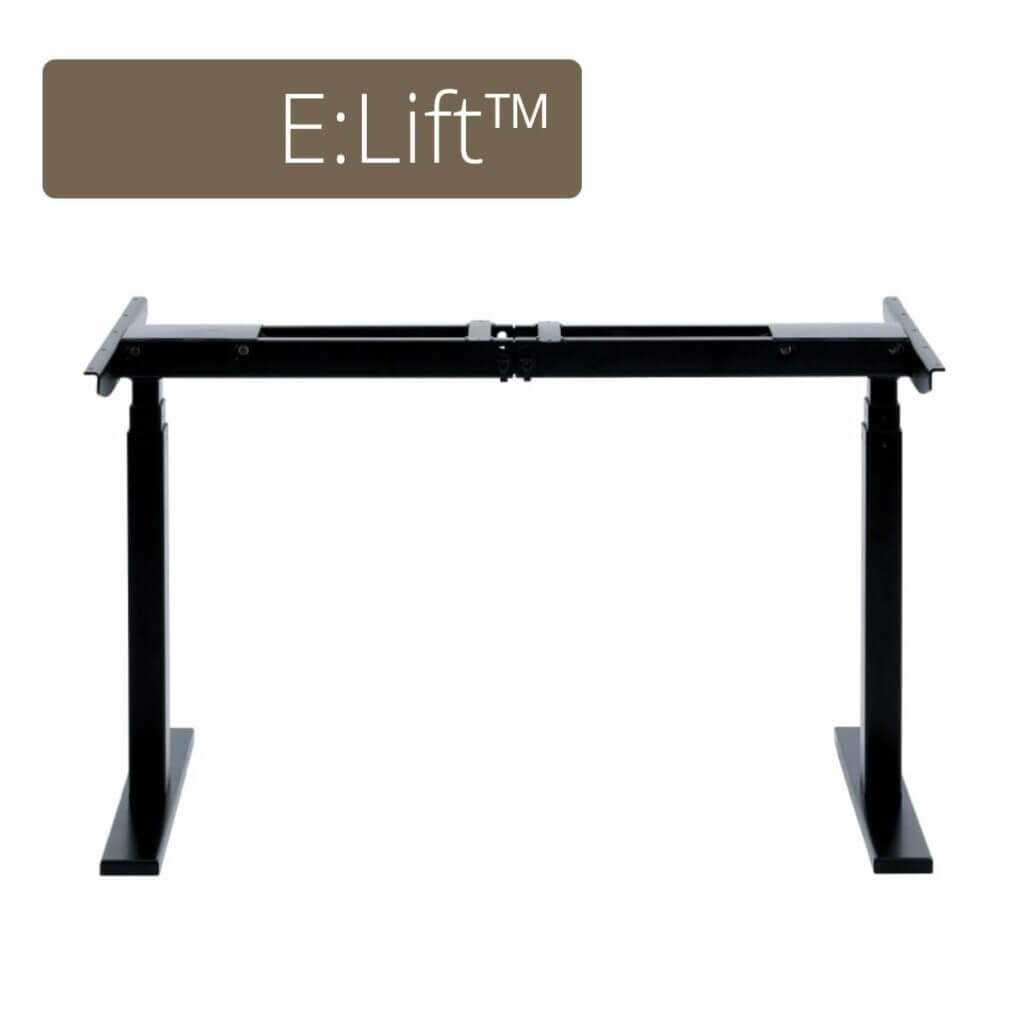
Many metal desk frames have an adjustable cross beam, meaning they can support tops within a given range. Manufacturers often quote a minimum and maximum top size, but in practice, you can often go smaller. Just make sure the mounting holes still align properly.
Check the feet size
Some frames have wide feet or stabilisers, you might want to avoid undersizing beyond the feet size, as they will determine the overall footprint of the desk. There’s little point in undersizing a top if the feet still protrude. Always check the full footprint of the frame before finalising measurements.
Tips and tricks
Solid wood can be easily trimmed in the future
An advantage of solid wood is its flexibility for the future. If your needs change, a solid wood top can be trimmed down, reshaped, or even refinished to suit a new frame or space. Unlike laminate or veneer surfaces, which can be damaged by cutting, solid wood can be reworked. Using solid wood is a practical way to future-proof your investment and extend the life of your desk top.
Add batten support for fixed frames
If you’re using a fixed frame or built-in base, wooden battens can be added beneath the top to reduce flex and strengthen overhangs. This is particularly useful for thinner tops or wider spans.
Keep oversizing balanced
When adding extra width or depth, try to distribute it evenly. A balanced overhang on all sides looks neater and helps weight load evenly on the frame.
Typical overhang and undersize allowances
| Frame Type | Safe Overhang (Front/Back) | Safe Overhang (Sides) | Notes / Undersize Guidance |
|---|---|---|---|
| Fixed frame | Up to 150mm | Up to 150mm | Can support larger overhangs if evenly balanced; battens can reinforce thinner tops. |
| Sit/stand (height adjustable) | Up to 50–100mm | Up to 100mm | Keep overhangs smaller to maintain stability; check total weight against motor limits. |
| Built-in / cabinet-supported | Up to 200mm | Up to 200mm | Overhangs can extend further if supported by cabinets or brackets underneath. |
Commission your solid wood top today
Why Solid Wood Tops?
Made to any size and shape.
Completely custom without the premium price tag.
Custom size? Same price.
Desk top prices are worked out using a going market rate formula. There are no extra charges for non-regular sizes. Calculate your price and order in minutes.
FAQs

Learn more about us, the quality of our partners’ sustainably sourced wood, how desk tops are priced, delivery timescales etc. Read our articles, FAQs, or chat now.
Flexible delivery options

Our trusted partners are located around the country. Allow us to arrange delivery, pick up from the workshop yourself, or book your own courier.
Money back promise

Order requests have no cost or obligation. If you do decide to confirm, you are protected if there is a problem with the size, design, quality or wood. Order with confidence.