
A common question we get asked is: what size should my [desk/table/surface] be?
There are “typical” sizes for most uses, and it can be a helpful starting point. But it’s worth saying early on that there is no single correct answer, and nor should there be. Your top can be whatever size and shape you want it to be (within reason). Many of the tops we make fall outside these ranges, and that’s absolutely fine. The key is making sure the top is properly supported and built to suit the size.
Below is a practical guide to what’s considered “normal”, along with where you can comfortably go bigger or smaller.
What does ‘standard size’ actually mean?
Most furniture sizes are based on general usability, factoring in things like how much space a person needs to sit, work or move around comfortably. You’ll see similar ranges across retailers and ergonomics guidance, but there are no strict rules. Think of them as a starting point, not a limit.
Hard limits of how big or small you can go
You will be limited in how small you can go by the size of the frame, as you do not want to expose the frame underneath. You will also be limited in how big you can go by the amount of unsupported wood, but this is much trickier to determine, with many more factors at play.
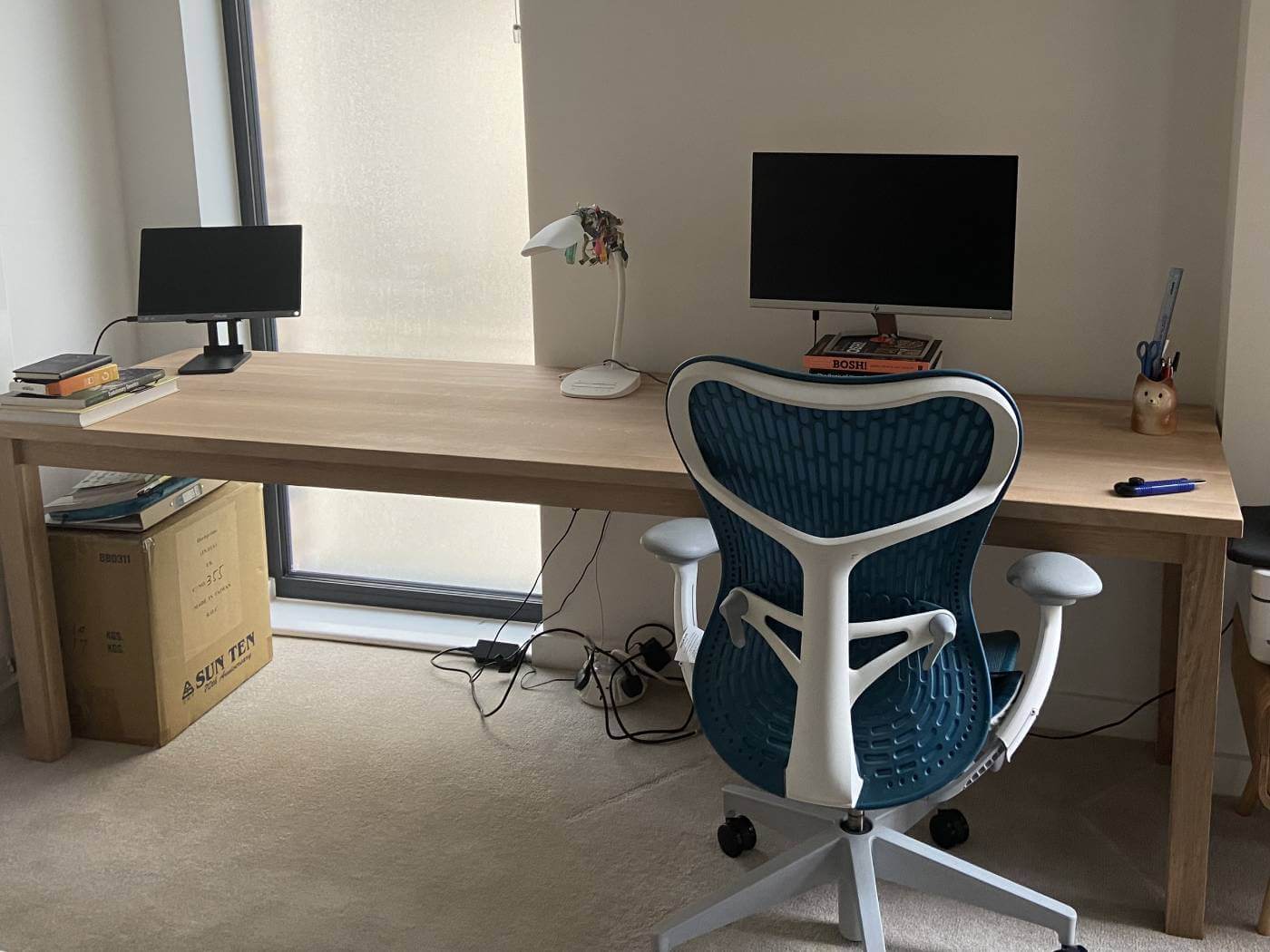
Desk tops (fixed height)
A typical desk top size is:
- Width: 1200–1600mm
- Depth: 600–800mm
Desks can be found even smaller (around 800–1000mm wide) for tighter spaces, while larger setups can stretch beyond 2200mm for dual monitors or shared workstations.
Most desk tops sit comfortably in the 20–30mm thickness range. Smaller tops can go thinner, and larger tops thicker, not just for strength but also to keep the desk proportions looking right.
If you go wider, just make sure the frame or legs provide enough support across the span.

Sit/stand desk tops
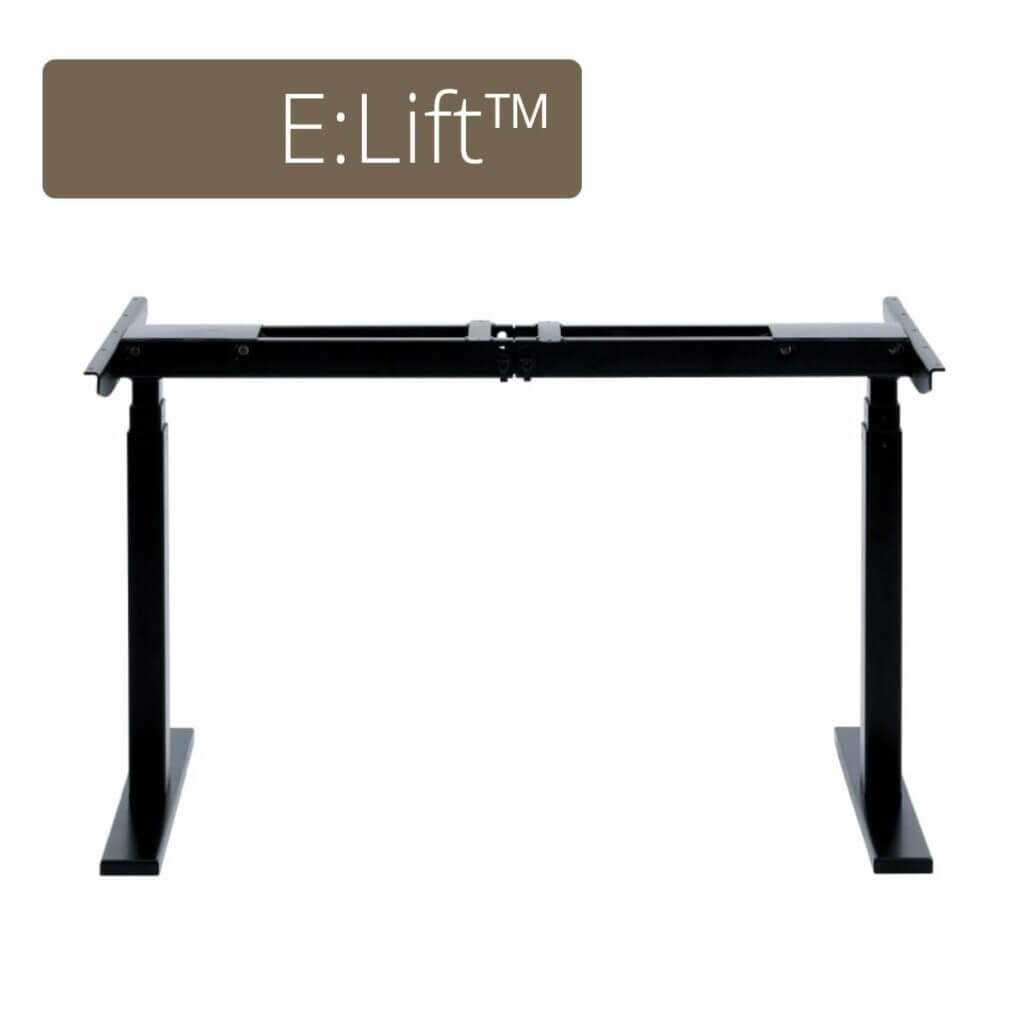
Sit/stand desks tend to follow similar sizes, but slightly deeper for stability:
- Width: 1200–1800mm
- Depth: 700–800mm
Because these tops move, balance and rigidity matter more. Keeping within typical ranges helps, but larger tops are still possible with the right frame. Making sure the weight is distributed correctly is important.
Get in touch with your ideas and we can guide you on sizing, thickness and support. Feel free to use our calculator tools to get a live estimate for the kind of top to fit your space and budget.
L shaped desk tops
L shaped desks are designed to make use of corner space and provide more usable surface area without needing a single very large span.
Typical sizes are:
- Long side: 1500–1800mm
- Return side: 1200–1500mm
- Depth: 500–750mm
Some designs use equal sides (for example 1500 x 1500mm), while others use a longer main desk with a shorter return. Smaller corner desks can drop below 1400mm per side, while larger setups can exceed 1800mm on each side. These ranges are based on common office furniture sizing.
Because the load is split across two runs, L shaped desks can often go larger without needing as much central support as a single long desk. However, the corner joint and overall support still need to be considered carefully.
As with all tops, thickness usually sits between 18–40mm, depending on span and overall design.
Dining table tops
Dining tables vary depending on how many people you want to seat:
- 4 people: ~1200 x 800mm
- 6 people: ~1600–1800 x 800–900mm
- 8 people: ~2000–2400 x 900–1000mm
Round tables are often 1000–1500mm diameter.
Thickness is usually 25–40mm, depending on the look you’re going for.
Larger tables are very achievable, but may need additional support (such as central rails or sturdy bases).
Kitchen islands & breakfast bars
Kitchen surfaces are often more about the space available than strict standards, but typical sizes are:
Kitchen islands:
- Length: 1200–2400mm
- Depth: 600–1200mm
Breakfast bars:
- Depth: 300–450mm
- Length: 1200–2000mm
Thickness usually sits around 30–40mm for a solid, durable feel.
Overhangs (for seating) are common, but need proper support underneath if extended too far.
Coffee tables & side tables
Coffee tables:
- Length: 800–1200mm
- Width: 500–700mm
- Height varies, but top size stays within this range
Side tables:
- Top size: 400–600mm (square or round)
These are usually lighter visually, so 18–30mm thickness works well.
Shelves, monitor stands & smaller pieces
These are often more flexible, but typical ranges include:
Shelves:
- Depth: 200–300mm
- Length: 600–1200mm (longer spans need support)
Monitor stands:
- Width: 500–800mm
- Depth: 200–300mm
Bay window seats:
- Depth: 400–600mm
- Length: depends on the space (often 1200mm+)
For longer shelves or seats, thickness and support become more important to prevent sagging or even breaking when sat on.
Commercial uses
Restaurant & café tables
- 2-seater: ~600 x 600mm
- 4-seater: ~700–800mm square or round
- Larger tables: 1200mm+
These need to be durable and stable, typically 25–40mm thick.
Conference tables
- Length: 2400–4000mm+
- Width: 1000–1400mm
Large-format tables like this often go beyond “standard” sizes and really are generally made to fill the space and/or suit the company requirements. They may require multiple bases, steel supports, or bracing underneath to maintain strength.
When ‘not normal’ works well
Many of the projects we work on fall outside these ranges and that’s often where solid wood really comes into it’s own.
Longer desks, extra-wide islands, and oversized tables are all completely achievable. The important thing is making sure:
- The thickness suits the span (typically 18–40mm)
- There is adequate support underneath
- Any overhangs or large sections are properly reinforced
If those are considered early on, there’s a lot of freedom in what you can create.
Design around your space
“Standard” sizes are useful as a guide, but they’re not something you have to stick to. Solid wood tops are made to order, which means you can design around your space and not the other way around!
Not sure what size works for your project?
Whether you’re working within typical dimensions or planning something completely bespoke, we’re happy to help.
Get in touch with your ideas and we can guide you on sizing, thickness and support, feel free to use our calculator tools to get a live estimate for the kind of top to fit your space and budget.
Why Solid Wood Tops?
Made to any size and shape.
Completely custom without the premium price tag.
Custom size? Same price.
Desk top prices are worked out using a going market rate formula. There are no extra charges for non-regular sizes. Calculate your price and order in minutes.
FAQs

Learn more about us, the quality of our partners’ sustainably sourced wood, how desk tops are priced, delivery timescales etc. Read our articles, FAQs, or chat now.
Flexible delivery options

Our trusted partners are located around the country. Allow us to arrange delivery, pick up from the workshop yourself, or book your own courier.
Money back promise

Order requests have no cost or obligation. If you do decide to confirm, you are protected if there is a problem with the size, design, quality or wood. Order with confidence.